.png)


High-Purity Peptides
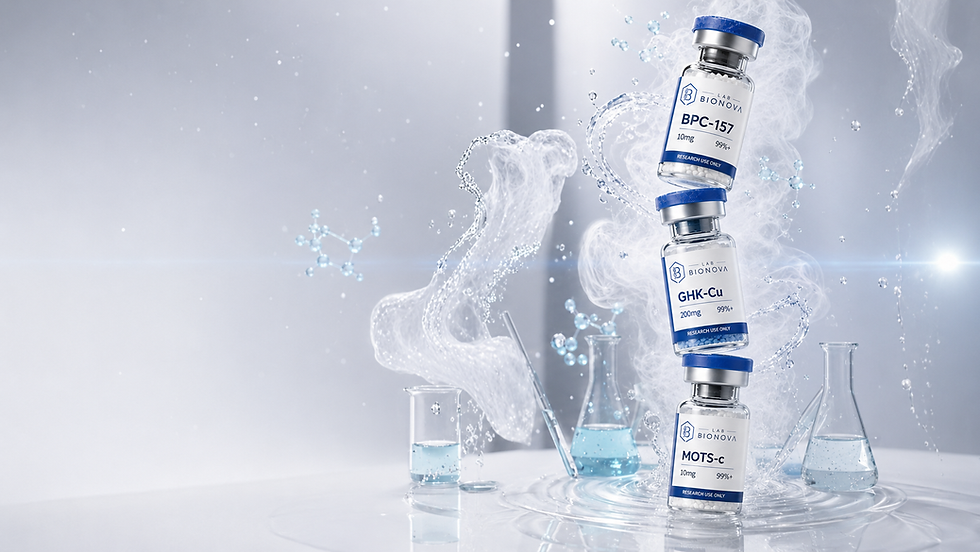
Our peptides are developed using state-of-the-art technology, ensuring exceptional purity and quality for scientific research.
Quality Assurance
Advanced Research Solutions
Technical Support

A triple hormone receptor agonist (GLP-1/GIP/Glucagon) under clinical investigation for the advanced treatment of obesity, type 2 diabetes, and metabolic dysfunction-associated steatotic liver disease (MASLD).

A dual GIP and GLP-1 receptor agonist indicated for the treatment of type 2 diabetes and chronic weight management. By synergistically activating both pathways, it significantly enhances insulin secretion, delays gastric emptying, and effectively reduces body weight.

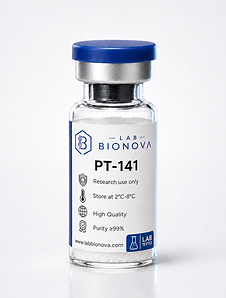
A synthetic peptide analogue of the human growth hormone (hGH) C-terminal fragment, investigated for its lipolytic properties. It stimulates fat metabolism and weight loss by mimicking hGH's ability to burn fat without affecting blood sugar levels or inducing cellular growth.

A synthetic peptide representing the lipolytic C-terminal region of human growth hormone, specifically optimized for fat reduction. It selectively stimulates lipolysis and inhibits lipogenesis without altering insulin sensitivity or impacting systemic growth pathways.
.png)
A cell-permeable small molecule that functions as a potent and selective inhibitor of nicotinamide N-methyltransferase (NNMT). By blocking NNMT activity, it increases intracellular NAD+ levels, effectively accelerating energy metabolism, stimulating lipolysis, and reversing diet-induced obesity.

A novel small-molecule estrogen-related receptor (ERR) agonist that functions as a potent exercise mimetic. By activating ERR pathways, it enhances skeletal muscle mitochondrial function, increases oxidative capacity, and promotes significant fat loss and endurance without physical exertion.

A synthetic pentadecapancreatic peptide derived from human gastric juice, widely recognized for its potent cytoprotective and angiogenic properties. It accelerates systemic tissue repair by promoting endothelial cell migration, stimulating collagen synthesis, and effectively healing muscles, tendons, and ligaments.

A synthetic peptide analogue of Thymosin Beta-4, a naturally occurring protein that plays a key role in cellular regulation and tissue regeneration. It accelerates wound healing, promotes angiogenesis, and reduces inflammation by upregulating actin, making it highly effective for muscle, tendon, and ligament repair.
.png)
A naturally occurring copper-complexed tripeptide known for its potent antioxidant, anti-inflammatory, and tissue-remodeling properties. It stimulates collagen and elastin synthesis, promotes angiogenesis, and accelerates wound healing while regulating gene expression to reverse cellular aging.

A naturally occurring tripeptide derived from alpha-melanocyte-stimulating hormone (α-MSH), characterized by its potent anti-inflammatory and antimicrobial properties. It actively suppresses inflammatory pathways by inhibiting NF-κB activation, making it highly effective in research focused on wound healing and inflammatory bowel diseases.

A synergistic multi-peptide complex combining GHK-Cu, BPC-157, TB-500, and KPV, engineered to optimize advanced tissue repair and cellular recovery. This formulation provides a multifaceted approach by concurrently accelerating angiogenesis, stimulating collagen synthesis, and suppressing acute inflammatory pathways at the injury site.

(Nicotinamide Adenine Dinucleotide): A critical coenzyme present in all living cells, essential for cellular energy production, mitochondrial function, and DNA repair. It serves as a vital electron carrier in metabolic pathways and acts as a necessary substrate for sirtuins and PARPs to regulate cellular aging and longevity.

A mitochondrial-derived peptide (MDP) that functions as a critical regulator of systemic energy homeostasis and metabolic flexibility. It translocates to the nucleus under metabolic stress to regulate gene expression, enhancing insulin sensitivity, promoting fatty acid oxidation, and mimicking the physiological benefits of physical exercise.

A mitochondria-targeted antioxidant peptide that selectively binds to cardiolipin on the inner mitochondrial membrane. By stabilizing cardiolipin structure, it optimizes electron transport chain efficiency, prevents mitochondrial permeability transition, and significantly reduces the production of damaging reactive oxygen species (ROS).

A synthetic tetrapeptide analogue of epithalamin, a naturally occurring peptide produced by the pineal gland. It functions as a potent telomerase activator, promoting telomere elongation, regulating melatonin secretion, and stabilizing neuroendocrine function to combat cellular senescence and promote longevity.

A synthetic peptide analogue of growth hormone-releasing hormone (GHRH) engineered with a stabilized structure to enhance resistance against enzymatic degradation. It selectively stimulates the anterior pituitary gland to synthesize and secrete endogenous growth hormone, effectively reducing visceral adipose tissue while maintaining normal glucose homeostasis.

A synthetic peptide analogue of growth hormone-releasing hormone (GHRH) engineered to bioconjugate with endogenous albumin via Drug Affinity Complex (DAC) technology. This structural modification dramatically extends its half-life, allowing for sustained stimulation of the anterior pituitary to release pulsatile growth hormone (GH) and elevate systemic IGF-1 levels.
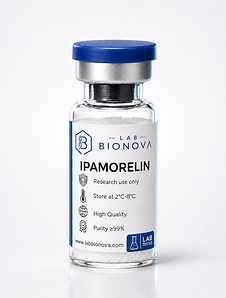
A synthetic pentapeptide and highly selective growth hormone secretagogue (GHS) that functions as a potent ghrelin receptor agonist. It stimulates the anterior pituitary gland to induce the pulsatile release of endogenous growth hormone without elevating cortisol, prolactin, or aldosterone levels, maintaining excellent metabolic selectivity.

A synergistic dual-peptide combination engineered to optimize endogenous growth hormone (GH) secretion through complementary mechanism pathways. By concurrently activating growth hormone-releasing hormone (GHRH) receptors and ghrelin/growth hormone secretagogue receptors (GHS-R), this formulation amplifies pulsatile GH release and elevates systemic IGF-1 levels without disrupting natural neuroendocrine negative feedback loops.

A synthetic Growth Hormone-Releasing Hormone (GHRH) analogue engineered with Drug Affinity Complex (DAC) technology, allowing covalent binding to circulating albumin and dramatically extending its half-life compared to unmodified GHRH fragments. This sustained-release mechanism enables continuous stimulation of the anterior pituitary, supporting elevated, pulsatile growth hormone and IGF-1 output over an extended dosing interval.
.png)
A recombinant 191-amino acid polypeptide identical in sequence to endogenous human pituitary growth hormone, produced through advanced biosynthetic technology for maximum purity and bioactivity. Functioning as a master regulator of cellular growth, it stimulates hepatic IGF-1 production, promotes lipolysis, and supports tissue regeneration, lean mass development, and long-term metabolic homeostasis.

A long R3 modified analogue of Insulin-like Growth Factor 1, engineered with an extended arginine sequence that reduces binding affinity to IGF-binding proteins and prolongs systemic activity relative to native IGF-1. Functioning as a potent anabolic and mitogenic agent, it is investigated for its ability to promote muscle cell hyperplasia, accelerate nutrient partitioning toward lean tissue, and support enhanced protein synthesis during recovery.
(Bremelanotide): A synthetic peptide analogue of alpha-melanocyte-stimulating hormone (α-MSH) that functions as a non-selective melanocortin receptor agonist. Unlike traditional phosphodiesterase inhibitors, it targets the central nervous system via MC3R and MC4R activation to modulate neurochemical pathways involved in sexual desire and erectile function.

Human Chorionic Gonadotropin:A heterodimeric glycoprotein hormone that functions as a potent analog of luteinizing hormone (LH) due to its shared structural binding affinity for the LH/choriogonadotropin receptor (LHCGR). It stimulates Leydig cells in the testes to synthesize and secrete endogenous testosterone, effectively preserving intratesticular steroidogenesis and preventing testicular atrophy during periods of gonadotropin suppression.

A pegylated variant of Mechano Growth Factor derived from IGF-1, widely recognized for its enhanced biological half-life and potent tissue-regenerative properties. It promotes localized muscle repair and hypertrophy by activating satellite cells, accelerating myoblast proliferation, and facilitating structural recovery in damaged muscle tissue.

A synthetic heptapeptide analogue of the naturally occurring immunomodulatory peptide tuftsin, modified to enhance its stability and bioavailability. It functions as a potent anxiolytic and nootropic agent, modulating the GABAergic system, elevating brain-derived neurotrophic factor (BDNF), and regulating monoamine neurotransmitters without causing sedative or addictive side effects.

A synthetic heptapeptide analogue of the adrenocorticotropic hormone (ACTH) fragment 4-10, structurally modified to optimize metabolic stability and central nervous system penetration. It functions as a potent nootropic and neuroprotective agent by upregulating brain-derived neurotrophic factor (BDNF), modulating monoaminergic neurotransmission, and mitigating neuroinflammatory pathways.

A naturally occurring tripeptide composed of glutamine, cysteine, and glycine, synthesized endogenously in nearly every cell and widely recognized as the body's master antioxidant. Beyond neutralizing free radicals and reactive oxygen species, it plays a central role in hepatic phase II detoxification, immune cell regulation, and the recycling of other antioxidants such as vitamins C and E.

For us, quality is not a claim — it is a process. Each batch undergoes purity testing and HPLC analysis, achieving ≥99% purity, and is accompanied by a Certificate of Analysis (COA) with individual batch identification. All products are lyophilized, sealed, and stored under controlled conditions (2–8°C) to preserve their stability and integrity from our laboratory to your bench.
Lab BioNova operates as the institutional brand and quality guarantor behind its products. Direct sales and customer support are handled through our network of distribution partners, allowing us to focus entirely on what we do best: science, sourcing, and quality assurance. We actively welcome new distribution and wholesale partners who share our standards.
All Lab BioNova products are intended strictly for research and laboratory use only. They are not intended for human or veterinary use, diagnosis, treatment, or consumption.
